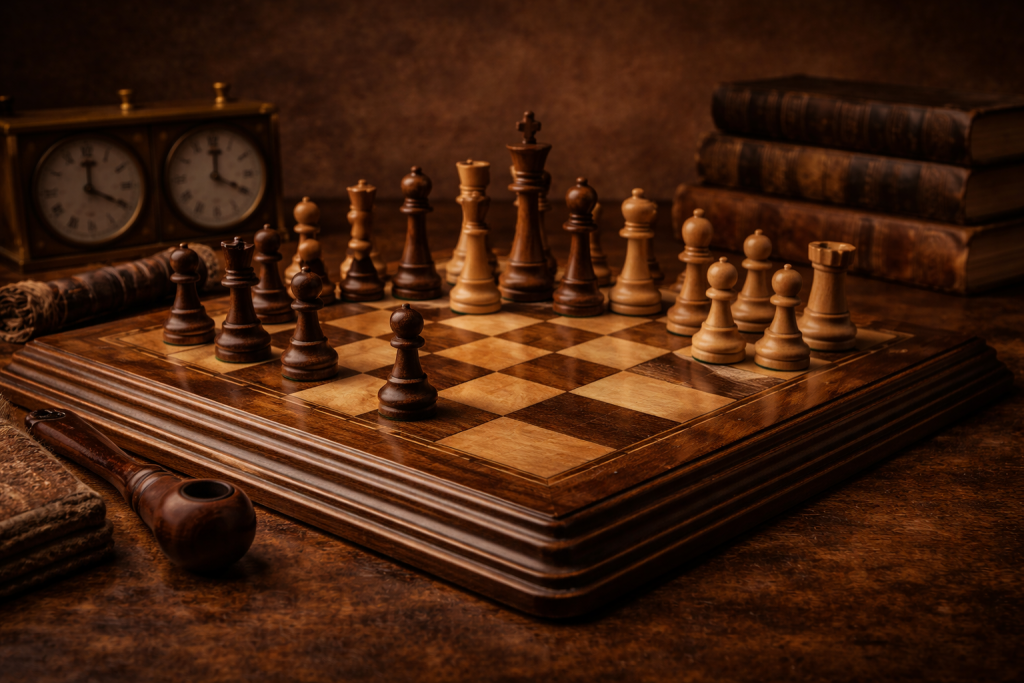
Chess is one of the oldest and most respected strategy games in the world. Known as the “game of kings,” it has fascinated players for centuries with its depth, complexity, and intellectual challenge. From ancient battlefields to modern digital platforms, chess has evolved into a global phenomenon played by millions.
The history of chess is rich and diverse, spanning continents, cultures, and generations. What started as a simple war simulation game has transformed into a refined and structured sport with international recognition.
In this article, we explore the complete history of chess—from its origins in ancient India to its development into the modern game we know today.
Origins of Chess in Ancient India
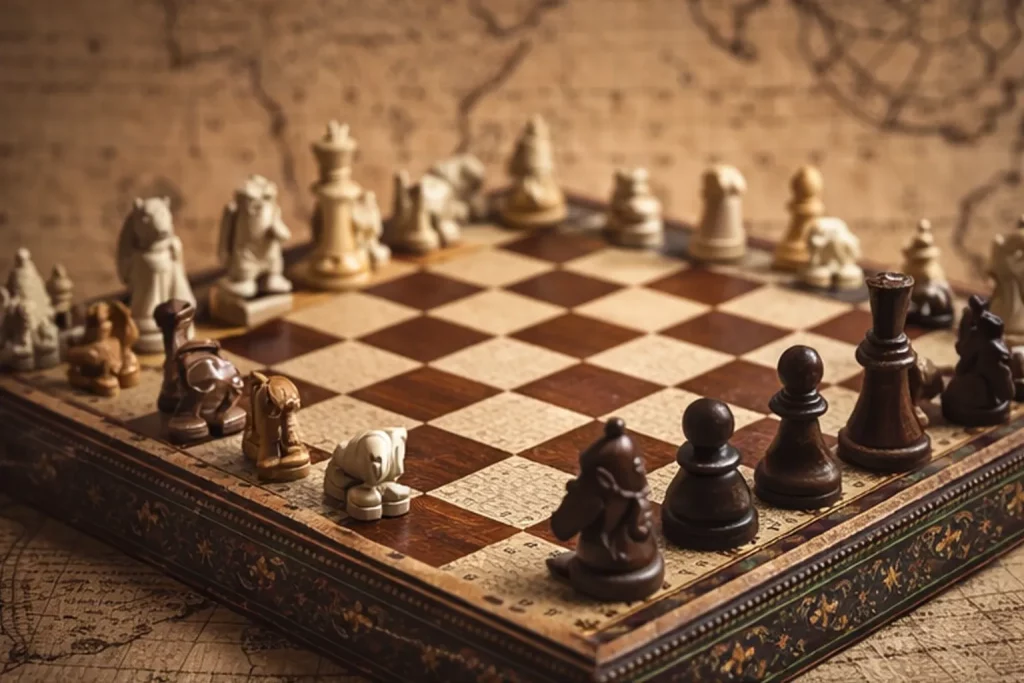
The earliest known ancestor of chess is believed to be Chaturanga, a game that originated in India around the 6th century during the Gupta Empire. The word “Chaturanga” means “four divisions of the military”—infantry, cavalry, elephants, and chariots.
Each piece in Chaturanga represented a part of the army:
- Infantry → Pawn
- Cavalry → Knight
- Elephants → Bishop
- Chariots → Rook
The game was played on an 8×8 board, similar to modern chess. However, the rules were simpler, and the gameplay focused more on simulating battlefield strategies.
Chaturanga laid the foundation for chess, introducing key concepts such as piece movement, strategic positioning, and the objective of defeating the opponent’s king.
Spread of Chess to Persia
From India, the game spread to Persia, where it became known as Shatranj. The Persians refined the rules and introduced new terminology that still exists in modern chess.
For example:
- “Shah” means king
- “Shah Mat” (checkmate) means “the king is defeated”
Shatranj gained popularity among Persian nobility and scholars. It was considered a game of intelligence and skill, often played in royal courts.
During this period, chess began to develop a more structured identity, with clearer rules and strategies.
Chess in the Islamic World
After the Islamic conquest of Persia, chess spread across the Islamic world, including the Middle East, North Africa, and Spain. The game flourished during this time, with scholars writing books on chess strategies and tactics.
Muslim players contributed significantly to the development of chess theory. They analyzed openings, endgames, and tactical patterns, laying the groundwork for modern chess strategy.
Chess also became a cultural symbol of wisdom and intellectual pursuit in Islamic societies.
Arrival of Chess in Europe
Chess entered Europe around the 9th century through trade and cultural exchanges. It quickly gained popularity among the nobility and became a staple of medieval life.
During the Middle Ages, the game underwent several changes:
- The bishop gained diagonal movement
- The queen became the most powerful piece
- The rules became faster and more dynamic
These changes transformed chess into a more aggressive and exciting game.
The Birth of Modern Chess
The modern version of chess began to take shape in the 15th century in Europe, particularly in Spain and Italy. This period is often referred to as the “birth of modern chess.”
Key developments included:
- Introduction of the powerful queen
- Faster gameplay
- Standardized rules
These changes made the game more strategic and competitive, paving the way for organized tournaments and formal play.
Rise of Chess Literature and Theory
As chess grew in popularity, players began documenting strategies, openings, and endgames. Books and manuscripts were published, helping players improve their skills.
Famous early works include:
- Chess manuals by Spanish and Italian masters
- Analysis of openings and tactical patterns
This period marked the beginning of chess as a serious intellectual discipline.
The First World Chess Championship
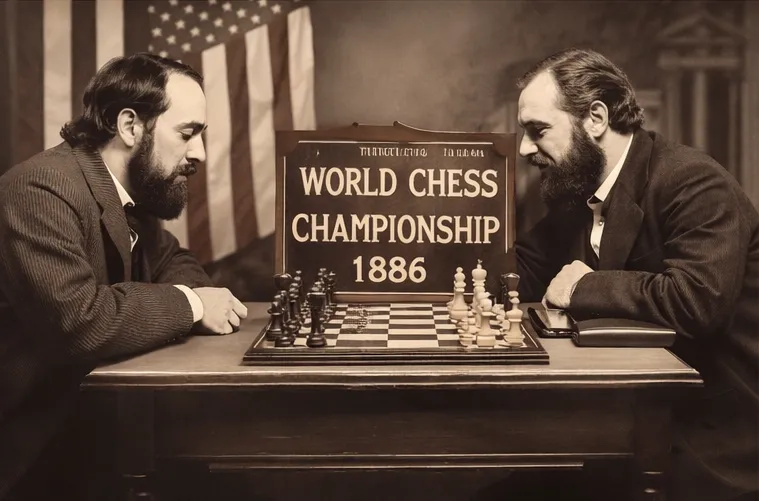
The first official World Chess Championship was held in 1886, marking a major milestone in chess history. The match was played between Wilhelm Steinitz and Johannes Zukertort.
Wilhelm Steinitz became the first World Chess Champion and is considered the father of modern positional chess. He introduced scientific principles to the game, emphasizing strategy over tactics.
Evolution in the 20th Century
The 20th century saw rapid growth in chess popularity and professionalism. Legendary players such as:
- José Raúl Capablanca
- Alexander Alekhine
- Bobby Fischer
- Garry Kasparov
revolutionized the game with their unique styles and innovations.
Chess became a global sport, with international tournaments, organizations, and rankings.

Chess in the Digital Age
With the advent of computers and the internet, chess entered a new era. Online platforms allow players to compete with opponents from around the world instantly.
Artificial intelligence has also transformed chess:
- Advanced engines analyze games
- Players use software to improve skills
- Online tournaments are widely accessible
Chess is now more popular than ever, reaching audiences across all age groups.
Why Chess Remains Timeless
Chess continues to thrive because of its unique combination of simplicity and depth. The rules are easy to learn, but mastering the game requires years of practice and dedication.
Benefits of chess include:
- Improved concentration
- Enhanced problem-solving skills
- Strategic thinking
- Mental discipline
Conclusion
The history of chess is a journey through time, culture, and intellect. From its origins in ancient India to its global presence today, chess has evolved into a game that transcends boundaries.
Whether you are a beginner or an experienced player, understanding the history of chess adds a deeper appreciation for the game. It connects you to centuries of tradition, innovation, and passion.
Explore our collection of premium chess sets and become a part of this timeless legacy.